

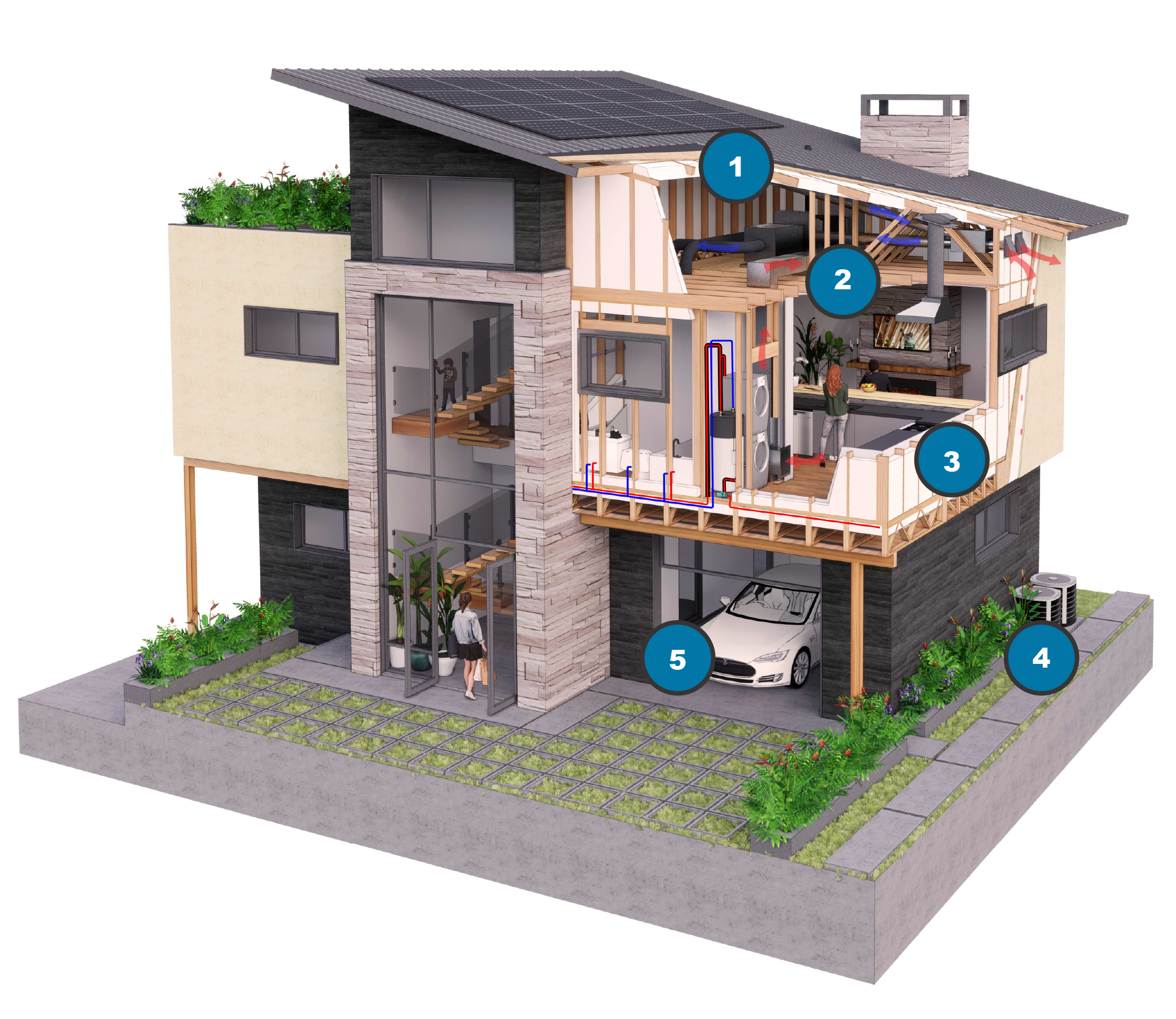
Here are some of the key areas in your home that can benefit from retrofitting with spray foam insulation:
Attics: Adding spray foam insulation to the attic can help maintain a consistent temperature in your home, reduce energy loss, and prevent ice dams in colder climates.
Walls: Existing walls can be retrofitted with spray foam by creating small openings or removing sections of drywall to access wall cavities. This enhances energy efficiency and comfort.
Crawl Spaces: Retrofitting crawl spaces with spray foam helps control moisture, prevent pests, and insulate the area, improving the overall indoor environment.
Basements: Insulating basement walls can help control moisture and create a more comfortable living space. It can also prevent cold air from infiltrating your home through the foundation.
Rim Joists: The area where the foundation meets the framing of the house, known as the rim joist, can be a significant source of air leakage. Retrofitting with spray foam effectively seals this area, improving energy efficiency.
Windows and Doors: While not technically insulation, retrofitting windows and doors with improved, energy-efficient models can enhance your home's insulation and reduce drafts.
Roofs: In some cases, a home's roof can be retrofitted with spray foam insulation from the underside of the roof deck to improve energy efficiency and prevent ice dams.
Garages: If you have living spaces above or adjacent to a garage, retrofitting the garage walls and ceiling with spray foam can help maintain a comfortable temperature in these areas.
Ductwork: If your home has ductwork in unconditioned spaces like attics or crawl spaces, sealing and insulating the ducts with spray foam can improve HVAC efficiency.